
Introduction
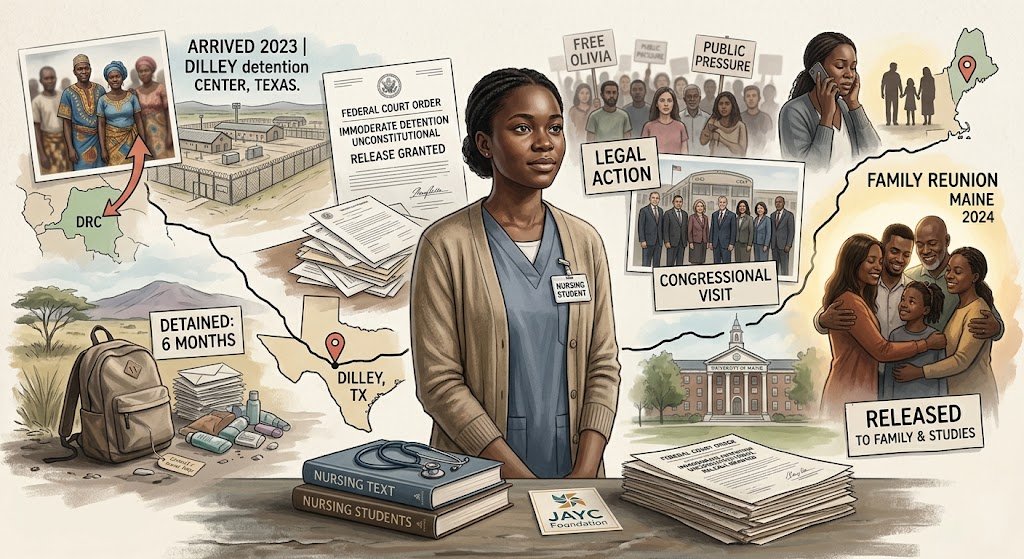
Olivia Andre Dilley detention release isn’t a hashtag — it’s a real 19-year-old who spent six months locked inside a Texas facility while her family waited in Maine. If you’ve seen her name trending and wondered what actually happened, you’re not alone. This story has judges, a member of Congress, a viral petition, and one very relieved family.
By the end of this article, you’ll know exactly what happened to Olivia Andre, why she was held at Dilley long after her mother and siblings went home, how the courts finally ordered her release, and what her case tells you about the broader immigration detention system — including a look at another recent case, courtroom interpreter Meenu Batra.
Table of Contents
- What Is the Olivia Andre Dilley Detention Release?
- Why Does This Case Matter?
- Key Facts: The Timeline and the Players
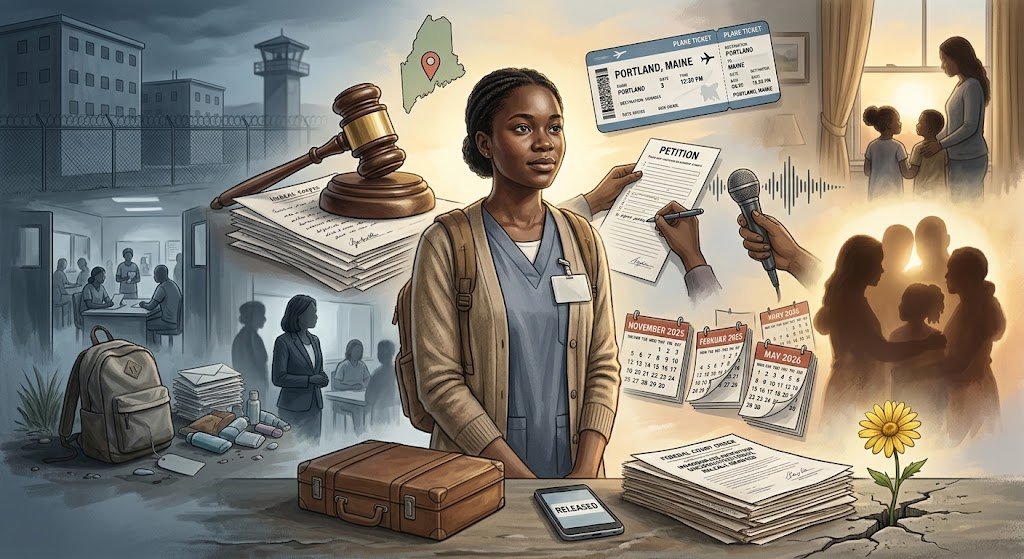
- How Olivia Andre’s Release Actually Happened
- Common Myths About the Case
- How You Can Get Involved
- Frequently Asked Questions
What Is the Olivia Andre Dilley Detention Release?
Here’s the short version. Olivia Andre is a 19-year-old asylum seeker from the Democratic Republic of the Congo who was living in Portland, Maine, and studying nursing. In November 2025, she and her family were detained by U.S. Immigration and Customs Enforcement officers while trying to seek asylum in Canada.
Her mom and younger siblings got released in March 2026. Olivia didn’t. She stayed locked up at the Dilley Immigration Processing Center in South Texas for close to six months — even after a federal appeals court blocked the family’s deportation while it reviewed their asylum case.
Think of it like this: imagine your whole family gets sent home from a rough trip, except you’re kept behind for reasons nobody explains. That’s basically what happened. In May 2026, a federal judge in San Antonio finally ruled that her detention had no lawful basis and ordered ICE to let her go.
The olivia andre dilley detention release is now the shorthand people use for that entire chain of events — the wrongful detention, the public pressure campaign, and the court order that sent her home.
Why Does This Case Matter?
This isn’t just one family’s story — it’s a window into how immigration detention works right now. Here’s why people are paying attention:
- Due process concerns: A federal court found Andre’s detention violated her right to due process, which raises questions about how many other detainees are in the same boat.
- Health and safety conditions: Her attorney said her mental and physical health suffered from a lack of clean water, food, and medical care inside Dilley.
- Family separation: Andre was held alone for months after her mother and siblings were freed, with no clear reasoning given.
- Public advocacy actually worked: A Change.org petition, media coverage, and a congressional visit all preceded her release order.
- It’s part of a bigger pattern: El Valle Detention Facility, where interpreter Meenu Batra was held, had an average daily population of 941 people in fiscal year 2026 — up sharply from prior years.
You don’t have to be an immigration lawyer to see why this matters. Cases like Olivia’s shape public trust in the entire detention system.
Key Facts: The Timeline and the Players
Let’s break down who’s who and what happened when, because the Olivia Andre Dilley detention release story has a lot of moving parts.
The Andre Family Timeline
| Date | Event |
|---|---|
| November 2025 | Family detained by border agents in New York trying to reach Canada |
| March 2026 | Mother and younger siblings released, return to Maine |
| Early May 2026 | Rep. Chellie Pingree visits Dilley, speaks with Olivia |
| May 6, 2026 | Federal judge orders Olivia’s release by Friday |
| May 8, 2026 | Olivia released, flies home to Portland Jetport |
The People Involved
- Olivia Andre — the 19-year-old nursing student at the center of the case
- Elora Mukherjee — her attorney and Columbia Law School professor
- Rep. Chellie Pingree — Maine congresswoman who visited Dilley and publicly pushed for release
- Rachel Griffin Accurso (“Ms. Rachel”) — the children’s entertainer whose public advocacy helped raise attention
- CoreCivic — the private company that operates the Dilley facility
Her release doesn’t mean the story is over. Her family’s asylum case is still working through the appeals process, which could take months or longer before it’s resolved.
How Olivia Andre’s Release Actually Happened
If you’re wondering how a wrongful detention actually gets reversed, here’s the real sequence, step by step:
- A legal team files for habeas relief. Attorney Elora Mukherjee and her team argued that Olivia’s continued detention was unconstitutional after her family’s case was already on appeal.
- Public advocacy builds pressure. A Change.org petition, community organizing in Portland, and celebrity attention from Ms. Rachel kept the case in the public eye for months.
- Elected officials get involved. Rep. Pingree personally visited Olivia at the Dilley facility and spoke with her for about an hour just before the ruling.
- The federal court reviews the facts. A judge in San Antonio determined the government had no lawful basis for holding her, especially once her family’s deportation was already paused.
- The court issues a deadline. The judge ordered Olivia released no later than Friday, giving ICE a hard timeline instead of an open-ended promise.
- ICE complies, and she flies home. Olivia landed at the Portland Jetport late on release day, met by family, friends, and supporters.
Notice what actually moved the needle: legal action plus public pressure, not one or the other alone.
Common Myths About the Case
Myth: Olivia was detained because she committed a crime.
Truth: She had no criminal record. DHS pointed to a final order of removal, but the court still found her ongoing detention unlawful.
Myth: Once her family was released, Olivia’s case was basically resolved too.
Truth: She stayed in custody for two more months after her mother and siblings went home, with no public explanation from ICE.
Myth: A judge’s release order means someone is free immediately.
Truth: Courts often set a deadline (in this case, “by Friday”), and processing can still take a couple of days.
Myth: Public campaigns don’t actually change ICE decisions.
Truth: Advocates, media coverage, and a congressional visit directly preceded the judge’s order — timing that mattered.
Myth: Release means the immigration case is over.
Truth: The family’s asylum appeal is still pending, and their long-term status in the U.S. isn’t guaranteed yet.
Expert Tips for Getting Involved and Staying Informed
If Olivia’s story moved you, here’s how to actually do something with that energy:
- Follow verified local reporting, like Maine Public and the Bangor Daily News, instead of relying only on social clips.
- Support organizations tracking detention conditions, since facility-level data (like population counts) is public and worth watching.
- Contact your own representatives the way Maine constituents pushed Rep. Pingree to visit Dilley in person.
- Share primary sources, not screenshots — link to the actual court reporting or petition update.
- Watch related cases too, like Meenu Batra’s, since detention patterns often repeat across facilities.
Frequently Asked Questions
Is Olivia Andre out of ICE detention now?
Yes. Following the Olivia Andre Dilley detention release order from a federal judge in San Antonio, she was released on May 8, 2026, and flew home to Portland, Maine, where she was greeted by family, friends, and supporters at the Portland Jetport that night.
What happened to Meenu Batra’s ICE detention case?
Meenu Batra, a longtime court interpreter, was detained in March 2026 despite holding withholding of removal status. She spent 45 days at El Valle Detention Facility before a federal judge ordered her immediate release after finding her due process rights were violated.
Is the Andre family’s asylum case fully resolved?
No. A federal appeals court has paused their deportation while it reviews the asylum case, but that review process could stretch on for months. Release from detention isn’t the same as a final immigration decision.
Conclusion
Here’s the bottom line on the olivia andre dilley detention release: a 19-year-old was held for six months with no lawful basis, her release only came after legal action combined with sustained public pressure, and her family’s underlying asylum case is still not fully decided. Cases like hers and Meenu Batra’s show that detention outcomes often hinge on who’s watching.
If this story stuck with you, share it, follow the ongoing appeal, and consider reaching out to your representatives about detention oversight. Start today — what’s one action you could take this week?
What do you think — should courts be setting harder deadlines in cases like this? Drop your thoughts in the comments.