
What Does “Participation Award DOAWK” Actually Mean?
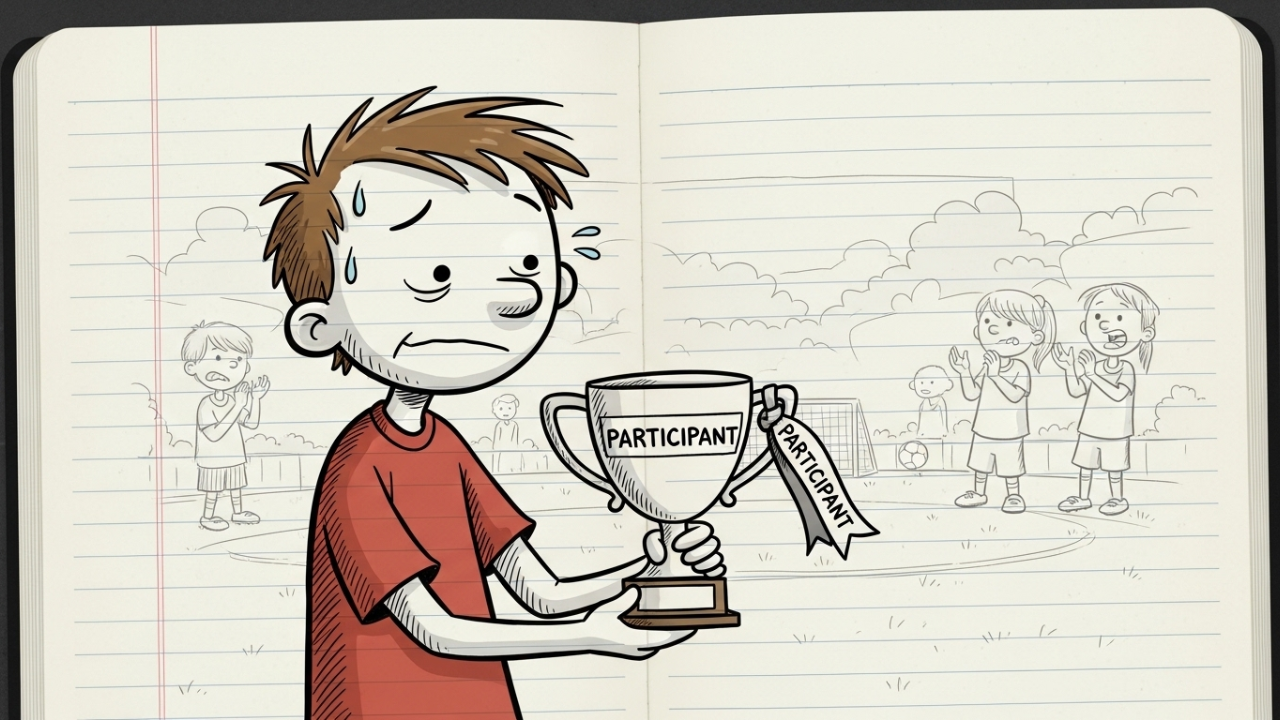
In the fan community, “participation award doawk” is a descriptive phrase, not a title. People use it when searching for a specific feeling or joke that defines Greg Heffley’s life: the awkward, often hollow recognition you get for simply “showing up.”
It taps into the series’ obsession with status, popularity, and the social pressure of middle school. When you type this keyword into Google, you are likely trying to recall a specific school reward scene, a fan meme, or the book Diary of a Wimpy Kid: Double Down, where Greg famously comments on “participation trophy” culture.
The Inspiration: Greg Heffley on “Participation Trophy” Culture
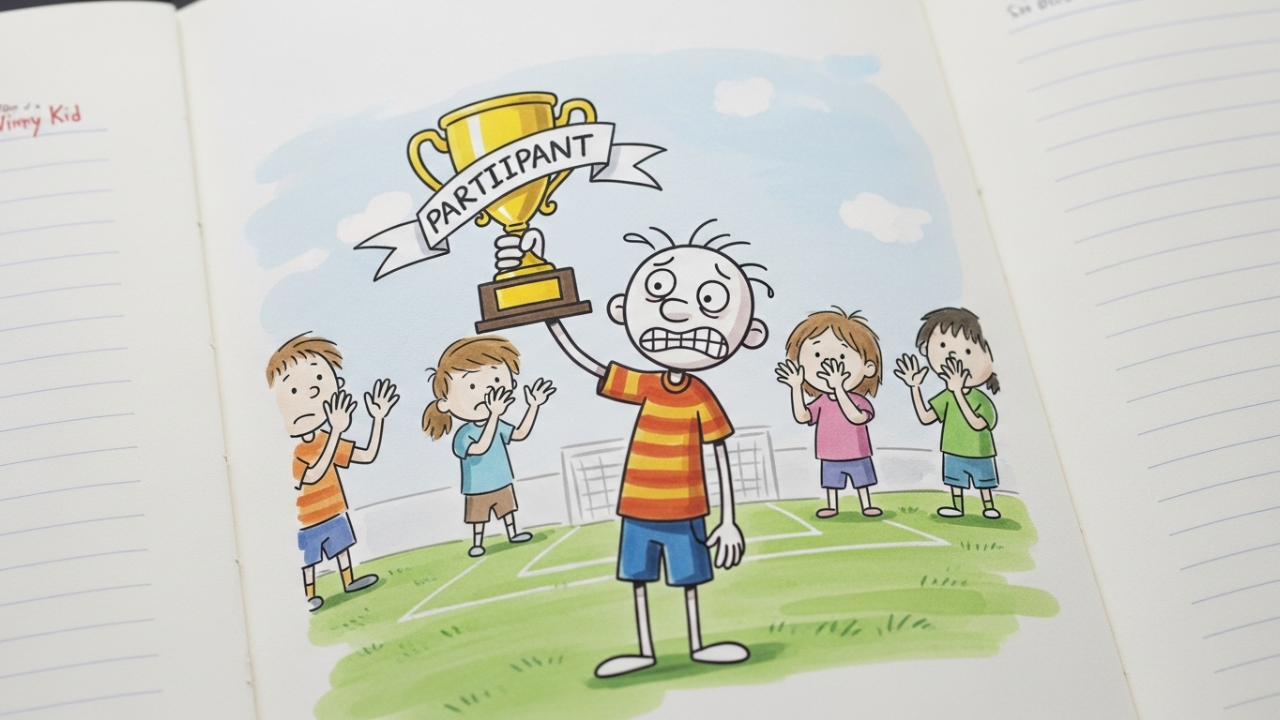
The strongest link between the Wimpy Kid series and this keyword comes from the eleventh book, Double Down. In that installment, Greg experiences a moment of meta-humor that many adults find painfully accurate. He watches his little brother’s soccer team celebrate the end of a terrible season with trophies—despite the fact that they lost almost every game.
Greg narrates in his journal, “I thought only the kids on the WINNING team would get trophies, which is how it worked when I played soccer. But I guess some parents were worried the kids on the losing team might feel bad about themselves, so this year EVERYONE got a trophy”.
He then sarcastically wonders, “I wonder if these kids will be messed up later on in life, though.”
That moment directly sums up the “participation award” debate, filtered through the dry, observant humor of a self-conscious middle schooler. This passage is likely the “missing link” that online searchers are trying to find when they look up the term.
Themes of Recognition in the Diary of a Wimpy Kid Universe
Why does a phrase like this stick to the DOAWK universe? The answer lies in Greg’s personality and the setting.
The Fear of Being Average
Greg is not a polished hero. He is petty, insecure, selfish, and desperate to be seen as exceptional. According to the official series description, Greg is a “regular kid with big dreams and even bigger problems.”
He does not just fear failure; he fears mediocrity. A participation award lands in the “awkward zone” between recognition and embarrassment. It says “good job for being involved,” but it can also sound like, “You were there, and that is the nicest thing we can say”. That dual meaning is comedy fuel for a character as image-conscious as Greg.
School Status as Currency
The Wimpy Kid series thrives because it captures how recognition works in a closed social ecosystem like middle school. Awards are never just awards; they are markers of status. A participation ribbon might encourage a shy kid to keep trying, but for Greg, it would likely be a source of humiliation. It highlights the gap between being “included” and being “excellent.”
The Rowley Jefferson Contrast
Fans of the series know that Greg’s best friend, Rowley, brings a softer, more sincere energy to the series. The phrase “participation award” feels like two different things depending on who receives it. Rowley could accept a “thank you for showing up” token with genuine grace. Greg would likely overanalyze it, compare it to what others got, and try to spin a simple ribbon into a story about why he deserved more.
This contrast is exactly the type of emotional chemistry that keeps the series funny and relatable.
The Bigger Conversation: Are Participation Trophies Good or Bad?
Once you understand that “participation award doawk” is about the debate behind the prize, the topic becomes more useful. Should we be giving out awards just for showing up?
The Case for Participation Trophies
Research suggests that praising children for perseverance—rather than just for winning—has long-term benefits for mental health and motivation. Dr. Shawna Campbell, a psychology professor at Bond University, notes, “The data does suggest that praising children and giving them encouragement for perseverance versus achievement is better for not just their long-term mental health, but it actually motivates them to persevere and to try“
Proponents argue that participation trophies encourage the development of resilience: if we only reward final outcomes, many kids might give up after their first failure. The act of trying, practicing, and improving deserves some form of acknowledgment to keep young people engaged in learning and sports.
The Case Against Participation Trophies
Critics argue that this mindset teaches children that minimal effort is enough, coddling them away from the reality that not everyone wins in life. Many experts and parents feel that trophies should reward specific accomplishments (like improvement or team spirit) rather than simply existing. If every outcome gets the same applause, the applause becomes wallpaper—present, but meaningless.
Where Greg Heffley Stands
Greg would likely side with the critics, but for the wrong reasons. He doesn’t oppose them on principle; he opposes them because they lower the value of his future victories. In Double Down, he sees the trophies as a joke because they erase the distinction between the winners (where he wants to belong) and the losers (where he fears he might actually be).
This is why the phrase works as a cultural shorthand. It encapsulates a scene, an irony, and a character flaw all at once.
A Parent’s Guide: Explaining Effort vs. Outcome
So, what should parents take away from the “participation award doawk” buzz? It opens a surprisingly useful conversation about effort, standards, and self-worth.
Here is a simple guide to navigating this tricky parenting topic:
1. Praise the Work, Not Just the “Showing Up”
Instead of handing out a generic “good job” ribbon, be specific. Say things like: “I noticed how you kept trying that math problem even when it got tough.” or “I really admire how you high-fived your teammates after the game.”
2. Be Honest About Results
You don’t have to pretend that every performance is equal. A child knows when they struck out or lost a race. Avoid empty praise. Instead, focus on identifiable improvements. This helps them build resilience and a realistic sense of their own abilities.
3. Separate Identity from Outcome
The healthiest middle ground is teaching that “you are not your result.” You can lose a game and still be a good person. You can place last in a spelling bee and still be intelligent. Participation awards are helpful when they emphasize courage and belonging over winning.
4. Know Your Child’s Personality
For an anxious or shy child, a “trying your best” award might be a huge confidence boost. For an ambitious child like Greg, it might feel like an insult. Adjust how you discuss recognition based on how your child receives it.
Conclusion: Decoding the Internet Mystery
To wrap it up, “participation award doawk” is one of those fascinating internet search phrases that reveals more about the searcher’s intent than about the actual content. It is not a book you missed or a lost manuscript by Jeff Kinney. Instead, it reflects a core theme that runs through the entire Diary of a Wimpy Kid franchise: the social chaos of growing up, the desire for meaningful recognition, and the fear of being forgettable.
By understanding the context behind the keyword, readers can stop searching for a prize that doesn’t exist and start appreciating the real jokes that inspired the search. Whether you are Team Participation Trophy or Team “Only Winners Deserve Praise,” Greg Heffley’s sarcastic take on the situation provides a humorous, relatable snapshot of modern childhood.