
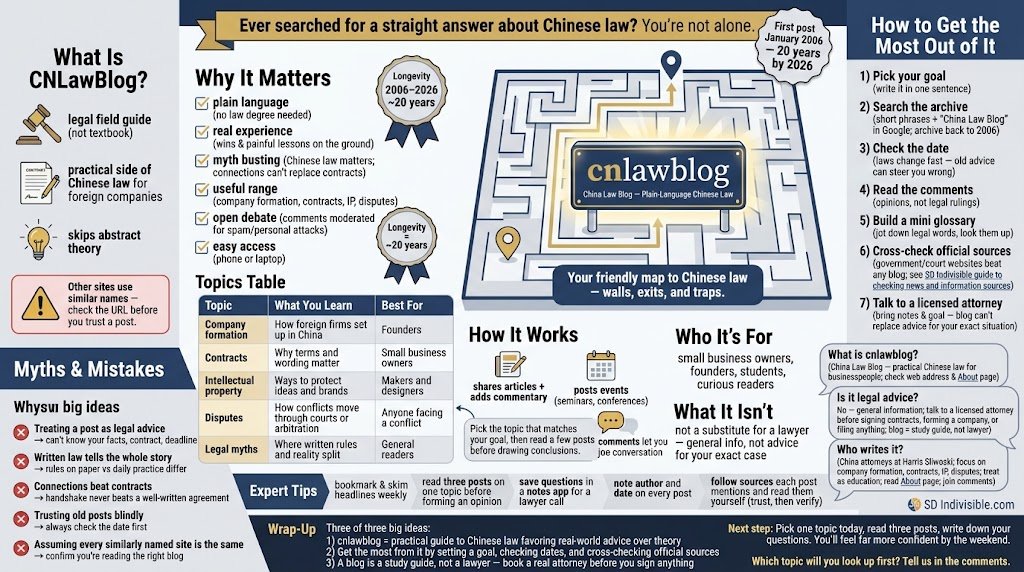
Ever searched for a straight answer about Chinese law and gotten buried in jargon? You’re not alone, and that frustration is why people type cnlawblog into Google in 2026. The name usually points to the China Law Blog, a long-running site that explains Chinese law in plain language.
This guide shows you what the blog covers, who it helps, and how you can read it without a law degree. You’ll learn the key topics, a simple step-by-step method for using it, the mistakes readers make, and answers to the questions people ask most.
Think of it as a friendly map. Chinese law can feel like a maze from the outside, but a good guide points out the walls, the exits, and the traps. By the end, you’ll know how to use that map, and when to call a real lawyer instead.
Whether you run a small shop, follow global news, or just love learning, this guide fits you.
Table of Contents
- What Is CNLawBlog?
- Why Does the China Law Blog Matter? Key Benefits
- China Law Blog Key Facts: Topics and How It Works
- How to Get the Most Out of the China Law Blog
- Common Mistakes and Myths About Chinese Law Blogs
- Expert Tips for Reading Chinese Law Content
- Frequently Asked Questions About the China Law Blog
What Is CNLawBlog?
CNLawBlog is the shorthand many readers use for the China Law Blog, a site about Chinese law and doing business in China. The blog centers on the practical side of Chinese law and how it affects foreign companies working in or with China. It skips abstract theory and sticks to what businesspeople actually need.
Its aim is to help companies already in China, or about to enter, rather than to push legal theory forward. Think of it as a legal field guide, not a textbook.
Here’s a simple picture. Imagine moving to a new city where the rulebook is in another language, and locals follow it a little differently than it reads.
A good neighbor tells you both what the book says and what really happens on the street. That’s the blog’s approach: it points out where China’s written laws and real-world experience don’t match.
A quick heads-up: a few other sites use similar names. One general legal-information site, for example, also covers U.S. topics like family law. Check the URL before you trust a post.
Why Does the China Law Blog Matter? Key Benefits
Here’s why readers keep coming back to the China Law Blog:
- Plain language. You get clear explanations without legal fog, so you can follow along without a law degree.
- Real experience. Posts share hard-won wins and painful lessons from work on the ground in China.
- Myth busting. The blog pushes back on the idea that Chinese law doesn’t matter or that personal connections can replace it.
- Useful range. Its attorneys focus on forming companies, drafting contracts, protecting intellectual property, and handling disputes.
- Open debate. Readers can disagree respectfully, though comments get moderated for spam and personal attacks.
- Easy access. You can browse posts on your own schedule, from your phone or laptop.
Longevity counts too. The blog published its first post in January 2006, so by 2026 it has been running for about 20 years.
Together, these perks make the blog a solid starting point for general readers.
China Law Blog Key Facts: Topics and How It Works
Let’s break down what you’ll find inside the China Law Blog and how the pieces fit together. Skim in any order you like.
What Topics Does It Cover?
The blog leans toward business-focused Chinese law. Expect posts on setting up companies, writing contracts, guarding ideas and brands, and solving disputes. Many of these come from attorneys who handle those exact tasks. Some posts also tackle cross-border trade questions that ordinary readers care about.
How Does the Blog Work?
The team shares articles from elsewhere and adds its own commentary. It also posts events like seminars and conferences that can deepen your grasp of China law. Comments let you join the conversation.
Who Is It For?
Small business owners, founders, students, and curious readers all get something here. If you want a heavy legal textbook, look elsewhere. If you want practical legal insight in plain talk, you’re in the right spot.
What It Isn’t
It isn’t a substitute for a lawyer. Posts share general legal information, not advice for your exact case. Treat each article as a starting point, then confirm details with a licensed attorney.
Here’s a quick summary table:
| Topic | What You Learn | Best For |
|---|---|---|
| Company formation | How foreign firms set up in China | Founders |
| Contracts | Why terms and wording matter | Small business owners |
| Intellectual property | Ways to protect ideas and brands | Makers and designers |
| Disputes | How conflicts move through courts or arbitration | Anyone facing a conflict |
| Legal myths | Where written rules and reality split | General readers |
The takeaway: pick the topic that matches your goal, then read a few posts on it before you draw conclusions.
How to Get the Most Out of the China Law Blog
Ready to put the China Law Blog to work? Follow these steps in order, and you’ll waste less time and learn more.
- Pick your goal. Decide what you want to know: how to form a company, how contracts work, or just what’s going on. Write it down in one sentence. A clear goal keeps you from wandering through random posts for an hour.
- Search the archive. Try short phrases like “contracts” or “trademarks” alongside “China Law Blog” in Google. The archive stretches back to 2006, so you’ll find plenty to read.
- Check the date. Laws change, sometimes fast. Note when a post went up, and hunt for newer updates before you act on anything. Old advice can steer you wrong.
- Read the comments. Readers add opinions and pushback that sharpen a topic. Just remember comments are opinions, not legal rulings. Skim a few before you close the tab.
- Build a mini glossary. Jot down unfamiliar legal words and look each one up. After a week, the vocabulary starts to feel normal, and posts read faster.
- Cross-check official sources. Compare what you read with government or court websites. Official pages beat any blog for final answers. For help spotting reliable sources, see [ SD Indivisible guide to checking news and information sources].
- Talk to a licensed attorney. Use what you learned to ask sharper questions. Bring your notes and your goal, because a blog can’t replace advice built around your exact situation.
Common Mistakes and Myths About Chinese Law Blogs
Mistake: treating a post as legal advice. A post shares general ideas. It can’t know your facts, your contract, or your deadline.
Myth: the written law tells the whole story. The blog itself stresses that rules on paper and daily practice can differ. Read both sides of the picture.
Myth: connections beat contracts. The blog argues that law in China matters and that personal relationships can’t simply replace it. A handshake never beats a well-written agreement.
Mistake: trusting old posts blindly. Laws change, so a great post from years ago may be out of date. Always check the date first.
Mistake: assuming every similarly named site is the same. Names overlap online. Confirm you’re reading the right blog before you act on what it says.
Expert Tips for Reading Chinese Law Content
- Bookmark the blog and skim headlines once a week. Small habits add up fast.
- Read three posts on one topic before you form an opinion. Patterns show up quickly.
- Save your questions in a notes app. You’ll be ready for a lawyer call with sharp, specific asks.
- Note the author and date on every post you rely on. That context matters.
- Follow the sources each post mentions, and read them yourself. Trust, then verify.
Frequently Asked Questions About the China Law Blog
What is cnlawblog?
People usually mean the China Law Blog, a site that explains Chinese law for businesspeople. The blog focuses on practical issues for foreign companies working in or with China. It skips heavy theory and stresses real-world results. A few other sites use similar names, so check the web address and read the About page to confirm you’re in the right place.
Is the China Law Blog legal advice?
No. The blog shares general information and experience, not advice tailored to you. Laws change, and every business situation has its own details. Use posts to learn the basics and to prepare questions, then talk to a licensed attorney before you sign contracts, form a company, or file anything. That step protects your money and saves you stress later. Think of the blog as your study guide, not your lawyer.
Who writes the China Law Blog?
The posts come from China attorneys at the law firm Harris Sliwoski, whose website hosts the blog. Their focus includes forming companies, drafting contracts, protecting intellectual property, and handling disputes. Because practicing lawyers write it, you get a working-lawyer view. Still, treat it as education, and read the About page to see how the team describes its mission. You can also join the conversation in the comments.
Wrap-Up: Your Next Step With the China Law Blog
Let’s recap the three big ideas. First, cnlawblog points to a practical guide to Chinese law that favors real-world advice over theory. Second, you get the most from it when you set a goal, check dates, and cross-check official sources. Third, a blog is a study guide, not a lawyer, so book a real attorney before you sign anything.
Ready to start? Pick one topic today, read three posts, and write down your questions. You’ll feel far more confident by the weekend.
Which topic will you look up first? Tell us in the comments.