
The automotive repair industry continues evolving as modern vehicles become more advanced, connected, and specialized. From engine diagnostics to precision servicing, workshops and technicians increasingly depend on reliable equipment to maintain efficiency and accuracy.
Among manufacturers operating in this space, Hangzhou Hontu Machinery Equipment has gained recognition for supplying automotive maintenance tools and repair solutions to international markets.
This guide explores what Hangzhou Hontu Machinery Equipment offers, its product categories, manufacturing approach, advantages for buyers, and factors businesses should consider before selecting automotive tool suppliers.
Understanding Hangzhou Hontu Machinery Equipment
Hangzhou Hontu Machinery Equipment, commonly referenced as Hangzhou Hongtu Machinery Equipment Co., Ltd., is a China-based manufacturer focused on automotive repair and maintenance tools. The company operates from Hangzhou in Zhejiang Province and has developed capabilities across product development, manufacturing, and international distribution.
Its business model centers on supporting automotive professionals with specialized repair equipment used in workshops, garages, and industrial maintenance environments.
Over the years, the company has expanded internationally and supplies customers across multiple regions.
Why Automotive Tool Manufacturers Matter Today
Modern vehicles are more complex than ever.
Technicians now work with:
- Advanced engine systems
- Hybrid and electric vehicle components
- Electronic diagnostics
- Precision timing systems
- Specialized suspension assemblies
Standard hand tools alone are often insufficient.
Manufacturers such as Hangzhou Hontu Machinery Equipment help fill this gap by developing purpose-built servicing tools designed for modern automotive requirements.
Core Product Categories Offered
One of the reasons industrial buyers evaluate suppliers carefully is product breadth.
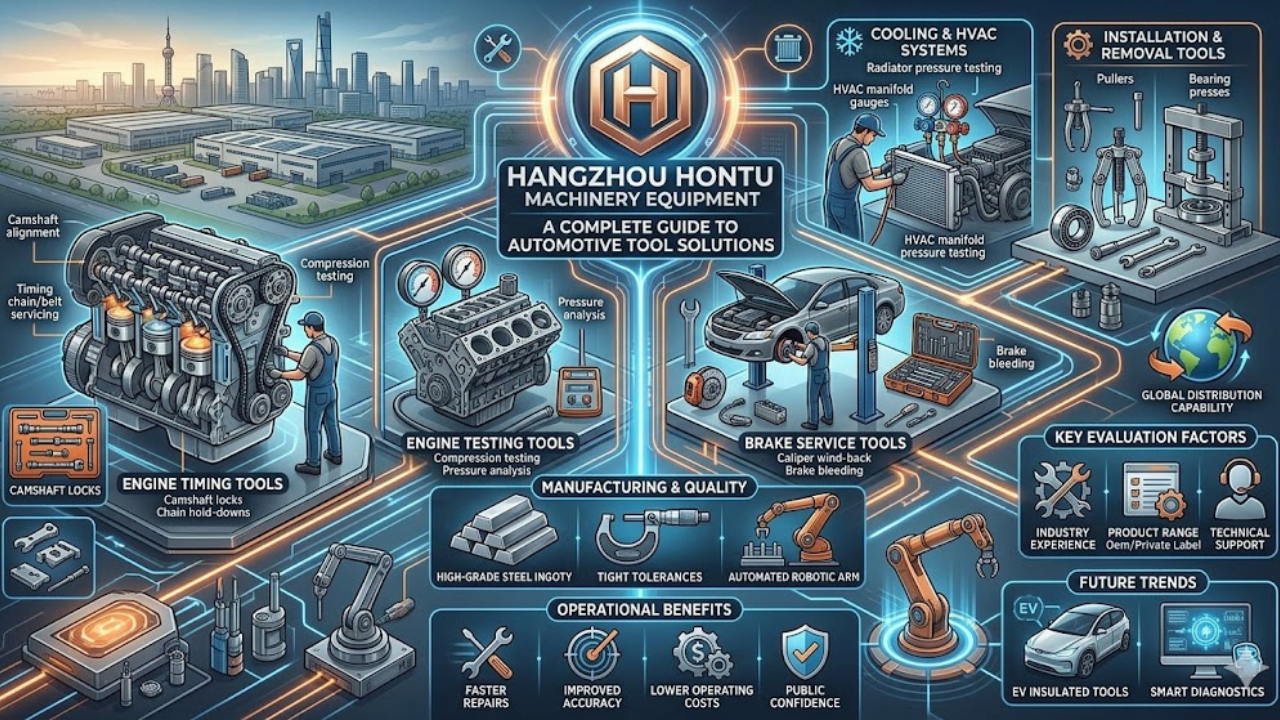
According to company materials, Hangzhou Hontu Machinery Equipment manufactures and supplies multiple automotive service tool categories.
Engine Timing Tools
Engine timing requires precision.
Timing tool kits support:
- Camshaft alignment
- Timing chain servicing
- Belt replacement
- Engine synchronization
These tools reduce installation errors and improve repair consistency.
Engine Testing Tools
Diagnostic and testing equipment allows technicians to identify issues faster.
Common applications include:
- Compression testing
- Pressure analysis
- Engine condition evaluation
- Performance verification
Brake Service Tools
Brake maintenance remains one of the most frequent workshop services.
Typical solutions include:
- Brake bleeding tools
- Caliper service kits
- Drum brake tools
- Installation accessories
Cooling System Tools
Vehicle cooling systems demand specialized service procedures.
Examples include:
- Leak detection equipment
- Cooling pressure testers
- Service adapters
- Maintenance kits
Air Conditioning Tools
Automotive HVAC systems require dedicated repair equipment.
These may include:
- Refrigerant servicing tools
- Disconnect tools
- Leak detection equipment
- Compressor maintenance accessories
Installation and Removal Tools
These tools simplify disassembly and installation work while reducing component damage.
Examples include:
- Pullers
- Bearing tools
- Extractors
- Alignment tools
Manufacturing and Product Development Approach
Industrial buyers rarely evaluate tools based on appearance alone.
Key evaluation areas usually include:
Material Quality
High-grade materials influence:
- Tool lifespan
- Corrosion resistance
- Load performance
Production Consistency
Manufacturing consistency affects:
- Dimensional accuracy
- Reliability
- Repeat performance
Design Efficiency
Professional repair tools should prioritize:
- Ergonomics
- Ease of use
- Service efficiency
According to company information, Hangzhou Hontu emphasizes research, development, manufacturing integration, and long-term product improvement.
How Businesses Benefit from Specialized Automotive Tools
Purchasing decisions are not only about price.
The right equipment can improve overall operational performance.
Faster Repairs
Purpose-built tools reduce unnecessary labor time.
Improved Accuracy
Vehicle-specific tools lower installation errors.
Lower Operating Costs
Durable equipment often reduces replacement frequency.
Better Customer Satisfaction
Efficient repairs support faster turnaround times.
Workshops that invest strategically in tooling frequently improve both productivity and customer retention.
Choosing the Right Automotive Tool Supplier
If you are evaluating suppliers, avoid focusing solely on product catalogs.
Consider these factors.
Industry Experience
Look for manufacturers with established production history and technical knowledge.
Product Range
Broader selections simplify procurement.
Quality Standards
Review testing procedures and consistency controls.
Technical Support
Strong support improves long-term purchasing value.
Global Distribution Capability
Reliable logistics reduce supply chain disruptions.
These evaluation criteria help buyers reduce procurement risk.
Industries That Use Automotive Maintenance Equipment
Although automotive workshops are primary customers, the applications extend further.
Vehicle Service Centers
Routine maintenance operations require dedicated tooling.
Commercial Fleet Operations
Fleet maintenance relies on efficient repair processes.
Technical Training Institutes
Educational environments use professional-grade equipment.
Industrial Maintenance Facilities
Many mechanical systems share servicing requirements.
Parts Distribution Businesses
Distributors often source directly from manufacturers.
This broad demand supports continuous innovation in automotive service equipment.
Common Questions Buyers Ask Before Ordering
When researching suppliers, buyers typically ask practical questions.
Is Product Compatibility Important?
Yes.
Tool compatibility with vehicle models directly impacts usability.
Does Buying Directly Reduce Costs?
Direct purchasing can improve pricing and communication depending on order volume.
Are Custom Solutions Available?
Many industrial manufacturers support OEM and private-label opportunities depending on production capability.
How Important Is Technical Documentation?
Very important.
Documentation supports:
- Product training
- Correct usage
- Safety procedures
- Long-term servicing
Future Trends in Automotive Tool Manufacturing
Automotive service equipment continues changing alongside vehicle technology.
Several trends are shaping the industry.
Electric Vehicle Service Equipment
EV growth increases demand for specialized repair tools.
Smart Diagnostic Integration
Digital testing equipment is becoming more common.
Lightweight Tool Engineering
Manufacturers continue reducing weight while maintaining strength.
Higher Precision Manufacturing
Tighter tolerances improve servicing accuracy.
Companies that adapt to these trends may strengthen long-term competitiveness.
Best Practices for Buyers Working With Tool Manufacturers
Before finalizing purchases:
- Define operational requirements
- Compare product categories
- Request technical details
- Review shipping expectations
- Confirm after-sales support
- Evaluate total ownership cost
Thoughtful purchasing decisions often deliver stronger long-term returns than selecting the lowest upfront price.
Final Thoughts
Selecting the right automotive tool supplier can influence workshop productivity, service quality, and operational efficiency.
Hangzhou Hontu Machinery Equipment has positioned itself in the automotive maintenance and repair sector through a broad product offering focused on professional service tools and equipment. Public company information highlights experience in manufacturing automotive repair solutions and serving international markets.
Whether you operate a repair center, distribution business, or industrial maintenance facility, evaluating supplier capabilities, product quality, and long-term support remains essential.
Ready to upgrade your workshop operations? Start by assessing your current tool setup, identifying productivity gaps, and exploring professional-grade solutions that match your business goals.