
Introduction
Have you ever scrolled through your news feed and wondered why San Diego keeps appearing in headlines about massive protests? From the U.S.-Mexico border to downtown Waterfront Park, America’s Finest City has become a flashpoint for some of the largest demonstrations in recent American history.
The problem is that with so many protests happening so quickly—covering everything from immigration enforcement to workers’ rights to the war in Iran—it can feel impossible to keep track of what’s actually going on. News clips flash by, numbers get thrown around, and the full picture remains frustratingly out of reach.
This article cuts through the noise to deliver a comprehensive, fact-based look at the San Diego protest movement. You’ll learn about the major demonstrations that have reshaped the city’s civic landscape, understand why tens of thousands of people are taking to the streets, and gain practical knowledge about your rights and how to stay informed. By the end, you’ll have a clear understanding of one of the most significant protest movements in San Diego’s history.
What Are the San Diego Protests?
The San Diego protests refer to a series of large-scale demonstrations that have taken place across San Diego County since mid-2025, continuing into 2026. These events have drawn tens of thousands of participants and have become part of a broader national movement against the policies of the Trump administration.
The “No Kings” Movement
The most significant protest movement in San Diego has been the “No Kings” protests—a nationwide series of demonstrations against what organizers describe as the authoritarian actions of the Trump administration. The name “No Kings” reflects the movement’s central message: that the United States is a democracy, not a monarchy, and that executive power must be checked.
The movement began gaining momentum in mid-2025 and has grown substantially with each iteration:
-
June 2025: At least 60,000 people participated in “No Kings” protests in downtown San Diego, according to the San Diego Police Department, with organizers estimating even higher numbers.
-
October 2025: The second round of “No Kings” protests drew an estimated 25,000 to 50,000+ in downtown San Diego’s Waterfront Park and over 35,000 more in rallies held across San Diego County. Total countywide participation exceeded 85,000 people.
-
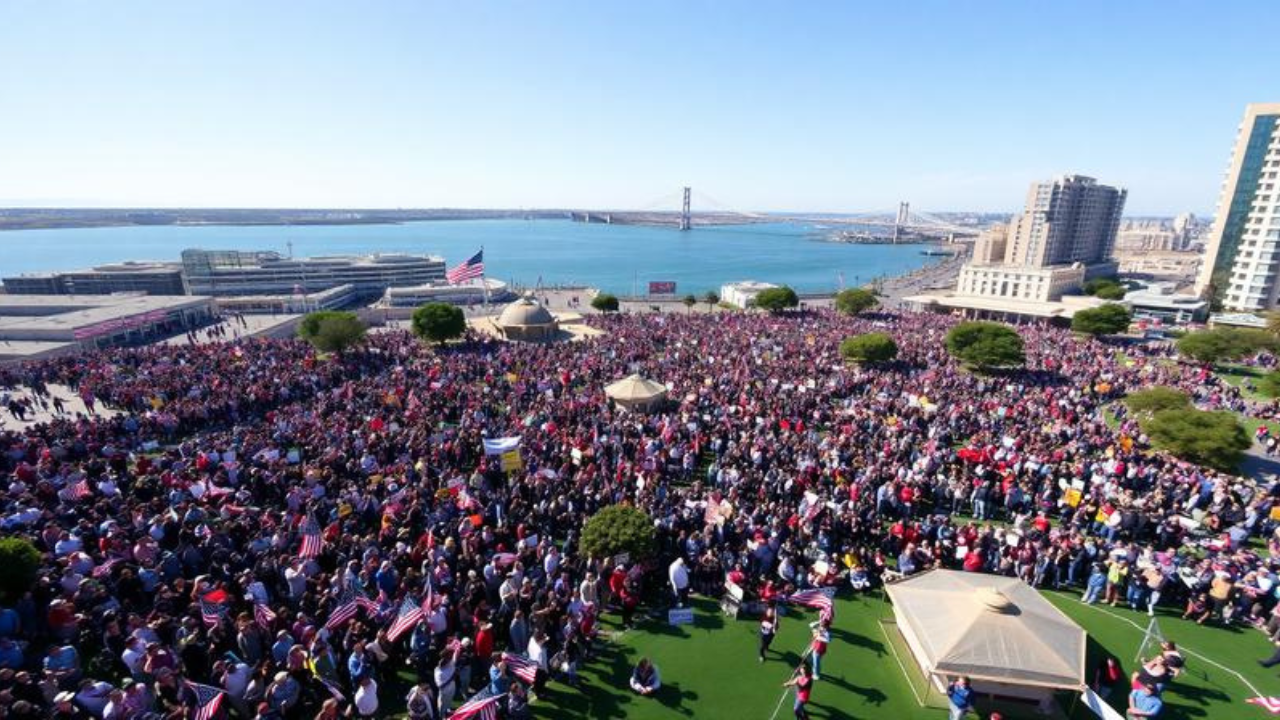
March 2026: A record 94,000 people participated in 21 separate “No Kings” protests across San Diego County, making it the largest single-day pro-democracy turnout on record locally. The San Diego Police Department estimated approximately 40,000 attended the main downtown rally at Waterfront Park.
Other Major Protest Movements
Beyond “No Kings,” San Diego has seen significant demonstrations on other issues:
May Day (International Workers’ Day) 2026: Hundreds gathered at Chicano Park in Barrio Logan and Waterfront Park to support workers’ rights and condemn the Trump administration’s crackdown on immigration. More than 500 people attended the Chicano Park march. Activists called for workers to “fight back against the AI billionaires and the Trump administration who attack immigrant communities, strip workers’ rights, and rig the economy”.
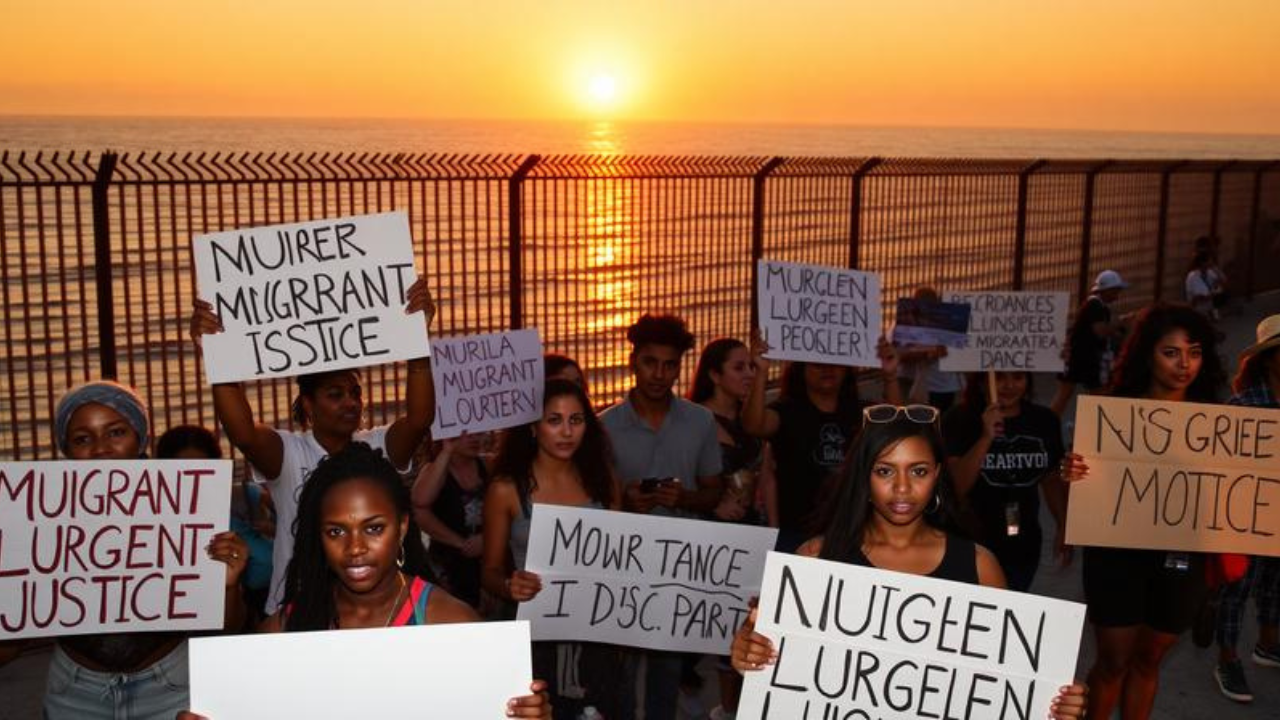
Border Protests: In June 2026, between 300 and 400 people marched down the beach to the southwest corner of Border Field State Park near the U.S.-Mexico border, calling for protection for migrants and their right to seek asylum. Around 30 demonstrators were arrested by U.S. Border Patrol agents.
Immigration and ICE Protests: Throughout 2025 and 2026, numerous demonstrations have targeted Immigration and Customs Enforcement (ICE) operations. These have included rallies at the San Diego Federal Building, protests in El Cajon, and even a unique paddle-out demonstration at La Jolla Shores where about 40 people on surfboards took to the water to protest ICE.
Iran Solidarity Protests: In January 2026, more than 500 protesters gathered in Clairemont to show support for those in Iran protesting against their government.
Pro-Palestinian Demonstrations: Since 2024, San Diego has seen repeated pro-Palestinian rallies, including an estimated 1,000-person march in downtown in October 2024 and a 2,500-person demonstration at UC San Diego in March 2024.
Why These Protests Matter: Significance and Impact
A Movement of Unprecedented Scale
The San Diego protests represent something remarkable: one of the largest sustained protest movements in the city’s history. To put the numbers in perspective, San Diego’s population is approximately 1.4 million. When 94,000 people take to the streets in a single day, that’s nearly 7% of the city’s population participating in political action.
Nationally, the “No Kings” movement has drawn an estimated 7 million protesters across the United States, making it one of the largest protest movements in American history.
The Issues at Stake
The protests have centered on several interconnected concerns:
Immigration Enforcement: San Diego sits on the U.S.-Mexico border, making immigration policy a deeply personal issue for many residents. Protesters have pointed to increased ICE arrests, the treatment of detainees at the Otay Mesa Detention Center, and the fear that ICE enforcement actions are separating families. “All over the place, with immigration and people not working because they’re afraid they’re going to be snagged,” one protester told CBS8.
Cuts to Social Programs: Demonstrators have voiced alarm over cuts and reductions to healthcare, Medicaid, and school nutrition programs. “Taking us to war, taking away the children’s benefit of education and health, this is not okay, and we need to let him know, and we need to stop it now,” said Linda, a protester who told CBS8 she had been demonstrating for 50 years.
Executive Power and Democracy: The “No Kings” movement has framed itself as a defense of democratic institutions against what it sees as the centralization of executive power. Protesters have chanted “No kings in the U.S!” as they marched. The movement has called for the impeachment and removal of Trump and the abolition of ICE.
Workers’ Rights: Labor unions have been central to many demonstrations. At the May Day rallies, speakers called for a “thriving wage” and criticized the growing wealth gap. “Billionaires aren’t paying us enough to live or get by,” protesters declared.
The War in Iran: Many protesters have expressed opposition to U.S. military action in Iran, carrying signs and flags referencing the conflict.
Community and Institutional Response
The protests have drawn support from a wide range of community organizations—more than 30 organizations supported the March 2026 “No Kings” rallies. Speakers have included San Diego County Supervisors Terra Lawson-Remer and Paloma Aguirre, Pastor Manuel Retamoza of The Border Church, and Lorena Gonzalez, the California Federation of Labor Unions president.
The San Diego Police Department has consistently praised protesters for remaining peaceful. After the March 2026 protest, SDPD stated: “Today’s march concluded safely. No arrests were made, no crimes were reported, and all downtown road closures have been lifted”. The department has affirmed its commitment to “protecting the rights of all individuals to assemble and exercise their freedom of speech”.
However, not all demonstrations have been without incident. In June 2026, around 30 demonstrators were arrested near the border. In January 2026, four protesters who barricaded themselves inside Mayor Todd Gloria’s office were granted misdemeanor diversion. And in South Park and Linda Vista, ICE agents called the San Diego Police Department for help when confronted by protesters who crowded around and spat on ICE agents’ cars.
Step-by-Step: How to Understand and Engage with San Diego Protests
Step 1: Know Your Rights
The First Amendment of the U.S. Constitution and the California Constitution protect the right to peacefully assemble and exercise freedom of speech. The San Diego Police Department “fully supports the right to peacefully assemble and exercise freedom of speech”.
However, certain activities are not protected:
-
Blocking roadways
-
Destroying property
-
Engaging in violence
Additionally, San Diego has ordinances that create buffer zones around schools, churches, and healthcare facilities, which can limit where protests may occur.
Step 2: Find Reliable Information Sources
With so many protests happening, it’s essential to know where to get accurate information:
-
Local News: CBS8, ABC 10News (KGTV), NBC San Diego, KPBS, and the San Diego Union-Tribune provide regular coverage of protests.
-
Community Organizations: Groups like the American Friends Service Committee, SEIU Local 221, and Take Action San Diego often post updates about planned demonstrations.
-
Official Sources: The San Diego Police Department and San Diego County Sheriff’s Office issue statements about planned protests and safety information.
Step 3: Understand the Protest Landscape
Protests in San Diego typically occur at several key locations:
-
Waterfront Park (downtown): The primary location for major rallies
-
Chicano Park (Barrio Logan): A historic site for Chicano activism and a frequent gathering spot
-
San Diego Federal Building (downtown): A common site for immigration-related protests
-
Border Field State Park: Near the U.S.-Mexico border
-
Various locations across the county: Protests have been held in Carlsbad, Chula Vista, El Cajon, Escondido, La Mesa, Mira Mesa, Oceanside, San Marcos, Vista, and many other communities
Step 4: Stay Safe If You Attend
If you choose to participate in a protest:
-
Stay with the group and follow organizers’ instructions
-
Know your rights and carry identification
-
Be aware of your surroundings and keep emergency contact information handy
-
Document responsibly—understand that recording police activity is generally legal but be aware of your surroundings
-
Follow all lawful orders from law enforcement
Step 5: Engage Beyond the Streets
Protests are just one form of civic engagement. Organizers have emphasized other forms of action, including:
-
Boycotts
-
Advocacy and contacting elected officials
-
Voting—as one protester put it, “that’s where real change will happen”
-
Support for neighbors and community mutual aid
-
Petition drives and recall efforts
Common Mistakes to Avoid When Following San Diego Protests
Mistake 1: Confusing Organizer Estimates with Official Counts
One of the most common sources of confusion is the discrepancy between crowd estimates. Organizers typically provide higher estimates than law enforcement. For example, at the March 2026 downtown rally, Take Action San Diego estimated 49,500-54,196 attendees, while the San Diego Police Department estimated 40,000. Both numbers are estimates, not exact counts, and the difference reflects different methodologies—organizers often count at peak attendance, while police may use more conservative methods.
Mistake 2: Assuming All Protests Are the Same
The San Diego protests encompass multiple distinct movements with different organizers, goals, and timelines. The “No Kings” protests are primarily focused on executive power and democratic institutions. May Day rallies focus on workers’ rights. Border protests focus on migrant justice. And pro-Palestinian demonstrations focus on the Gaza conflict. Treating them as a single movement oversimplifies a complex civic landscape.
Mistake 3: Believing the Protests Are Unpopular or Marginal
The sheer scale of participation—94,000 people on a single day—indicates significant public engagement. In El Cajon, a city with an all-Republican city council, the majority of vehicles driving past protesters “honked and waved in support”. This suggests the movement has broader community support than political labels might suggest.
Mistake 4: Assuming All Protests Are Peaceful or All Are Violent
The vast majority of San Diego protests have been peaceful. The San Diego Police Department has repeatedly praised protesters for remaining “peaceful and respectful”. After the March 2026 protest, SDPD reported “no arrests were made, no crimes were reported”. However, some demonstrations have seen arrests, including the June 2026 border protest where 32 people were arrested and the January 2026 City Hall barricade incident. The reality is that most protests are peaceful, with isolated incidents.
Mistake 5: Ignoring the Historical Context
San Diego has a long history of protest and free speech activism that informs today’s movements. In 1912, the city passed Ordinance No. 4623, banning public speaking in a 49-block section of downtown—a restriction that sparked a famous “free speech fight”. n 1970, community activists created Chicano Park by taking over land under a freeway intersection. In 1974, over 200 gays and lesbians marched through downtown for the first time to demand equal rights. Today’s protests are part of this long tradition of San Diegans exercising their First Amendment rights.
Frequently Asked Questions About San Diego Protests
1. How many people have participated in San Diego protests?
Participation has been substantial. The largest single-day event was the March 2026 “No Kings” protests, with organizers reporting 94,000 participants across 21 locations in San Diego County. Previous events drew 60,000+ in June 2025, 85,000+ in October 2025, and 12,000 in April 2025. Nationwide, the “No Kings” movement has drawn an estimated 7 million protesters.
2. What are the main issues driving the protests?
The protests address multiple interconnected issues: immigration enforcement and ICE operations, cuts to healthcare, Medicaid, and school nutrition programs, the war in Iran, workers’ rights and economic inequality, and concerns about the centralization of executive power. Organizers have called for the impeachment and removal of Trump and the abolition of ICE.
3. Are the protests peaceful?
The vast majority of San Diego protests have been peaceful. The San Diego Police Department has consistently praised protesters for remaining “peaceful and respectful”. After the March 2026 protest, SDPD reported “no arrests were made, no crimes were reported”. However, there have been some arrests, including 32 people at a June 2026 border demonstration and four people who barricaded themselves in City Hall.
4. What is the “No Kings” movement?
The “No Kings” movement is a nationwide protest movement against what organizers describe as the authoritarian actions of the Trump administration. The name reflects the movement’s message that the United States is a democracy, not a monarchy. The movement has drawn millions of participants nationwide and has held multiple rounds of protests in San Diego since June 2025.
5. Where do protests typically happen in San Diego?
Protests occur at multiple locations across San Diego County. The primary downtown location is Waterfront Park next to the County Administration Center. Other frequent locations include Chicano Park in Barrio Logan, the San Diego Federal Building, Border Field State Park near the U.S.-Mexico border, and numerous communities across the county including Carlsbad, Chula Vista, El Cajon, Escondido, La Mesa, Mira Mesa, Oceanside, San Marcos, Vista, and many others.
6. What are my rights if I want to protest?
The First Amendment protects the right to peacefully assemble and exercise freedom of speech. The San Diego Police Department “fully supports the right to peacefully assemble and exercise freedom of speech”. However, unlawful acts such as blocking roadways, destroying property, or engaging in violence are not protected. Additionally, San Diego has buffer zone ordinances around schools, churches, and healthcare facilities.
7. How do the protests relate to San Diego’s history?
San Diego has a rich history of protest and free speech activism. In 1912, the city banned public speaking in a 49-block zone, sparking a famous “free speech fight”. 1970, community activists created Chicano Park by taking over land under a freeway. In 1974, over 200 gays and lesbians marched through downtown for the first time to demand equal rights. Today’s protests continue this tradition of civic engagement and First Amendment exercise.
Conclusion
San Diego has become a focal point for one of the largest protest movements in recent American history. From the “No Kings” rallies that drew 94,000 people on a single day to the May Day marches for workers’ rights and the border demonstrations for migrant justice, tens of thousands of San Diegans have taken to the streets to make their voices heard.
The protests reflect deep concerns about immigration enforcement, cuts to social programs, the war in Iran, workers’ rights, and the state of American democracy. They have drawn support from more than 30 community organizations, elected officials, and labor unions. And they have been met with a police response that has largely been praised for protecting both the right to protest and public safety.
Whether you agree with the protesters or not, understanding what’s happening in San Diego’s streets is essential for anyone who cares about the city, the state, or the nation. The protests are not just news headlines—they are a reflection of a community engaging with the most pressing issues of our time.
If you found this article informative, consider subscribing to our newsletter for more in-depth coverage of civic issues affecting San Diego and beyond. And don’t forget to check out our other articles exploring the history of protest in American cities and the legal rights of demonstrators.