
Introduction
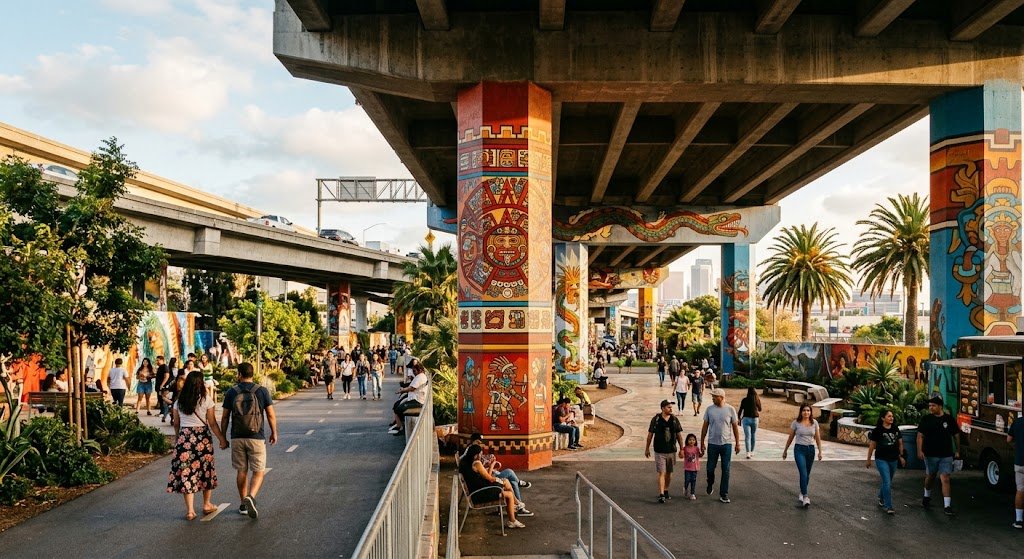
Under a freeway overpass in San Diego sits one of the largest collections of outdoor murals in the entire country — and most tourists drive right past it without knowing it exists. Chicano Park isn’t a typical city park with green lawns and picnic tables (though it has those too). It’s a 7.4-acre open-air museum born from a 12-day community occupation in 1970, and today it stands as a National Historic Landmark.
If you’ve searched for chicano park photos, chicano park events, or wondered whether the “Chicano Park” you heard about in Austin or El Paso is the same place, this guide answers all of it. You’ll learn what the park is, why it matters, how to visit in 2026, and the mistakes first-time visitors make. Let’s get into it.
Table of Contents
- What Is Chicano Park?
- Why Does Chicano Park Matter?
- Chicano Park — Key Facts and Related Sites
- How to Visit Chicano Park in 2026
- Common Mistakes and Myths About Chicano Park
- Expert Tips for Best Results
- Frequently Asked Questions
What Is Chicano Park?
Chicano Park is a public park in San Diego’s Barrio Logan neighborhood, tucked directly beneath the pylons of the San Diego–Coronado Bay Bridge and Interstate 5. It opened in 1970 after residents physically occupied the land for twelve days to stop the city from building a California Highway Patrol station on the site instead of the park the neighborhood had been promised.
Think of it like this: imagine your neighborhood loses its beach access and half its homes to freeway construction, and then the city tries to take the one patch of land left over too. That’s exactly what happened here — and the community said no. That standoff is why Chicano Park exists at all.
Today, more than 80 murals cover the concrete freeway pillars, painted by local, national, and international artists. The murals depict Aztec and Mayan imagery, civil rights leaders like Cesar Chavez and Dolores Huerta, and scenes from the fight to save the park itself. In 2016, Chicano Park earned National Historic Landmark status, putting it in the same tier of significance as sites like Independence Hall.
Why Does Chicano Park Matter?
Chicano Park matters because it’s one of the clearest examples in the country of a community reclaiming space through peaceful resistance and art. Here’s why it still resonates in 2026:
- It’s the largest collection of outdoor murals in the United States, according to the National Register of Historic Places — over 80 murals across roughly 24 pillars and abutments.
- It preserves Chicano Movement history at a time when many civil rights-era sites nationwide have been demolished or redeveloped.
- It’s a National Historic Landmark, a designation only about 2,600 sites nationwide hold, placing it alongside the Alamo and Ellis Island.
- It anchors the local economy, drawing visitors to Barrio Logan’s breweries, galleries, and shops on Logan Avenue.
- It’s still an active community space, hosting festivals, Aztec dance, and civic organizing — not a frozen-in-time exhibit.
- It restored its murals with federal funding in 2011–2012, work that earned a Grand Orchid award from the San Diego Architectural Foundation.
Chicano Park — Key Facts and Related Sites
Beyond the murals, Chicano Park has grown into a cultural campus with a dedicated museum, an annual celebration, and even a protest anthem. Here’s a breakdown of what makes up the full experience — and how it compares to parks with the same name elsewhere in the country.
The Chicano Park Museum
The Chicano Park Museum opened in 2022 after roughly six years of community planning. It functions as both a cultural center and the home base for Turning Wheel Productions, offering rotating exhibits, artist talks, and archives documenting the park’s history.
Chicano Park Day
Chicano Park Day happens every April, marking the anniversary of the 1970 occupation. Expect Aztec dancers, lowrider showcases, live music, food vendors, and thousands of visitors — it’s the single biggest date on the chicano park events calendar.
The Chicano Park Song
Local musicians and community members have written multiple songs honoring the park over the decades, often performed at Chicano Park Day. These tracks celebrate the park as a symbol of resistance and cultural pride rather than referencing one single official anthem.
Chicano Park, Austin and El Paso
Here’s where a lot of searches get confused. Chicano Park in San Diego is the original and the National Historic Landmark. But two other cities have places that share the name:
| Location | Official Name | Established | Landmark Status |
|---|---|---|---|
| San Diego, CA | Chicano Park | 1970 | National Historic Landmark (2016) |
| El Paso, TX | Lincoln Park (aka “Chicano Park”) | Early 1980s murals | Local landmark, community-protected |
| Austin, TX | Chicano Park | 1970 | Neighborhood park, East Austin |
Each site has real cultural weight in its own city, but when people say Chicano Park without specifying a city, they almost always mean San Diego’s Barrio Logan landmark.
How to Visit Chicano Park in 2026
- Pick a daytime slot. The murals are painted for sunlight, so visit between mid-morning and late afternoon to see the colors properly. Nighttime visits are possible but you’ll miss most of the artwork.
- Park near Logan Avenue or National Avenue. Free street parking is available around the park, and it’s a short walk from the trolley’s Barrio Logan station if you’d rather skip driving.
- Start at the Chicano Park Museum. Getting the historical context first makes every mural you see afterward hit differently — budget 30–45 minutes here.
- Walk the pillars in a loop. The murals wrap around dozens of columns, so plan for at least an hour of slow walking to actually take them in.
- Check the events calendar before you go. If you want to catch Chicano Park Day or a smaller community event, confirm the date on the park’s official pages, since festival dates shift slightly year to year.
- Bring a real camera or your phone on a wide setting. The murals are tall and close together, so wide-angle shots capture them best — this is why so many people search chicano park photos before visiting.
- Support the neighborhood after. Grab food or coffee on Logan Avenue; the surrounding shops and brewpubs are part of what keeps Barrio Logan’s cultural economy alive.
Common Mistakes and Myths About Chicano Park
- Mistake: Thinking it’s just a mural wall. In reality, Chicano Park is a full community park with playgrounds, gardens, a dance pavilion, and a museum — the murals are one part of it.
- Myth: All “Chicano Park” locations are the same site. They’re not. San Diego’s is the original National Historic Landmark; Austin and El Paso have separately established, locally significant sites with the same name.
- Mistake: Visiting only during Chicano Park Day. The park is worth seeing any day of the year — the festival is just the loudest version of it.
- Myth: The murals are static and unchanging. Artists have restored, replaced, and added murals for over 50 years, so returning visitors often spot new work.
- Mistake: Skipping the museum. Many visitors photograph the murals and leave without learning the 1970 occupation story, missing most of the meaning behind the art.
Expert Tips for Best Results
- Go on a weekday morning for the fewest crowds and the best natural light for photos.
- Read a mural before you photograph it — many have plaques or QR codes explaining the artist’s intent.
- Combine your trip with Barrio Logan’s gallery row for a full afternoon of Chicano art beyond the park itself.
- Follow the Chicano Park Steering Committee’s updates for the most accurate, current event listings.
- Bring cash for vendors during festivals — not every stand takes cards.
Frequently Asked Questions
What is Chicano Park known for? Chicano Park is best known for having the largest collection of outdoor murals in the United States, painted across freeway pillars in San Diego’s Barrio Logan neighborhood. It’s also known as a National Historic Landmark and as the site of a successful 1970 community land occupation that led to its creation.
What happened at Chicano Park? In April 1970, Barrio Logan residents occupied land the city planned to use for a California Highway Patrol station, demanding the park promised to them instead. After a 12-day standoff, the city agreed, and the community began painting the freeway pillars with murals soon after.
What events are happening at Chicano Park in San Diego? The biggest annual event is Chicano Park Day every April, featuring Aztec dance, live music, and vendors. Throughout the year, the park also hosts smaller cultural festivals, museum exhibits, and community organizing events — check local listings for exact 2026 dates.
Is Chicano Park free? Yes. Chicano Park is a public city park with free admission at all times. The Chicano Park Museum has also offered free or low-cost entry since opening in 2022, though special festival days may have optional vendor fees.
Conclusion
Chicano Park is proof that a community fighting for a patch of land can end up creating a national landmark. Remember the three big takeaways: it’s the largest outdoor mural collection in the U.S., it grew from a real 1970 occupation, and it’s still an active, free, living space in Barrio Logan — not a museum piece frozen in time.
If you’ve never been, start planning your 2026 visit today, and if you have, it’s worth going back — the murals keep changing. Have you visited Chicano Park, or is it on your list? Drop a comment and let us know.