
Introduction
You’ve seen the headlines. You’ve read the social media posts. The question keeps popping up: is there any proof that CWA is paying protesters? It’s a fair question, and you deserve a straight answer.
The Communications Workers of America (CWA) is one of the largest labor unions in the United States, representing hundreds of thousands of workers. In recent months, CWA members have been visible at protests, rallies, and picket lines across the country. But does that mean the union is paying protesters to show up?
Here’s the truth: there is no credible evidence that CWA pays outsiders to protest. What you’re seeing is union members exercising their legal rights to strike, picket, and demonstrate for better wages and working conditions. This article cuts through the noise, examines the actual proof (or lack thereof), and answers the related questions you’re probably asking—including whether Crowds on Demand is real and why some protesters face prosecution.
Table of Contents
-
What Is CWA and Why Are They Protesting?
-
Why Does This Question Matter?
-
CWA Protest Funding — Key Facts and How It Works
-
How to Verify Who’s Funding a Protest
-
Common Myths to Avoid
-
Expert Tips for Spotting Real vs. Paid Protests
-
Frequently Asked Questions
-
Conclusion
What Is CWA and Why Are They Protesting?
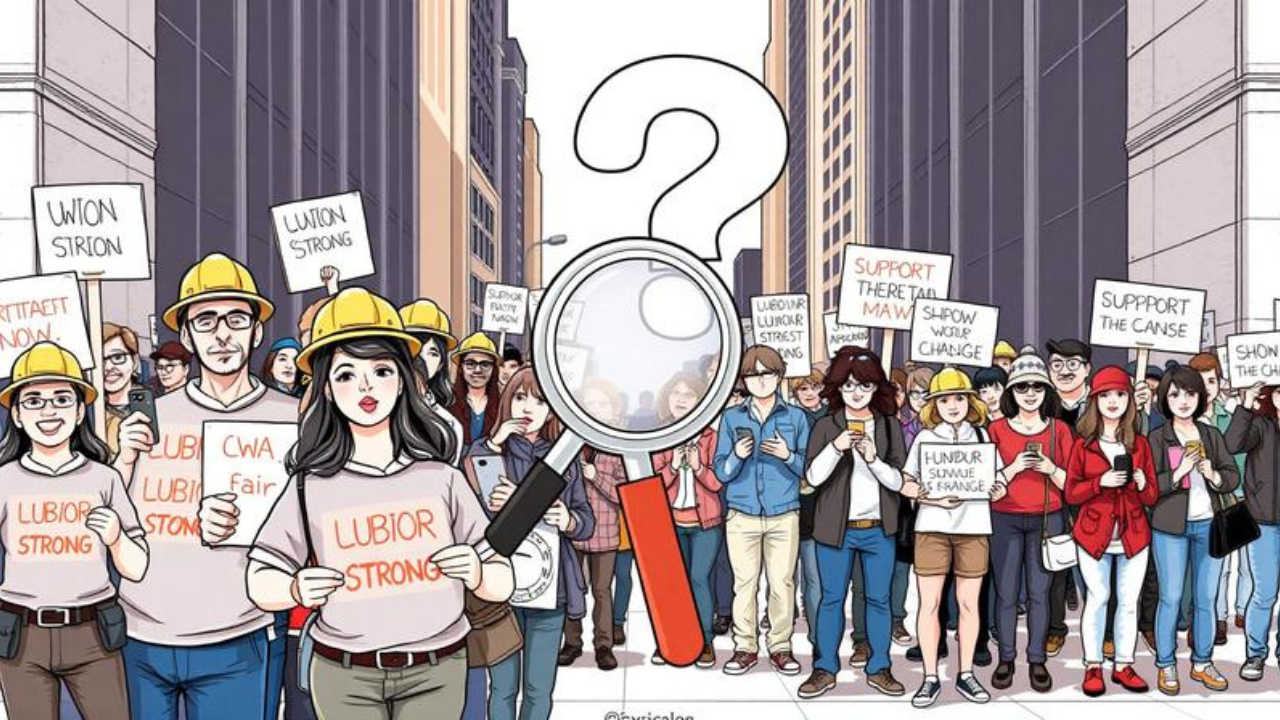
The Communications Workers of America (CWA) is a labor union that represents workers in telecommunications, customer service, media, airlines, and gaming. When you see CWA members on a picket line or at a rally, you’re looking at actual employees fighting for fair contracts, better pay, and job security.
Think of it like this: if your employer suddenly cut your pay or laid off your coworkers without warning, you’d probably want to speak up too. That’s exactly what CWA members do. They organize collectively to pressure employers like AT&T, Verizon, and Microsoft to negotiate in good faith.
In July 2026, for example, CWA filed unfair labor practice charges against Microsoft over mass layoffs at Xbox. Workers staged coordinated marches across multiple cities. These were employees fighting for their jobs — not hired actors.
The key distinction: CWA members are paid by their employers, not by the union to protest. The union supports their members through strike funds and legal defense, but that’s a very different thing from “paying protesters.”
Why Does This Question Matter?
You’re asking is there any proof that CWA is paying protesters because you want to know if what you’re seeing is authentic. That’s smart. Here’s why this question actually matters:
-
Transparency in activism — You deserve to know who’s behind a movement
-
Credibility of protests — Real grievances lose power if they’re staged
-
Your own decision-making — You might be asked to join or support a cause
-
Media literacy — Misinformation spreads fast; knowing the facts protects you
-
Legal implications — Paid protesting can cross into fraud or perjury
According to a 2025 report, requests for protest campaigns surged 400% in one year. That tells you two things: protests are more visible than ever, and the paid protest industry is real. But that industry is separate from CWA.
Key fact: CWA has a Strikers Fund and Members’ Relief Fund to support members during strikes. These funds help members pay bills when they lose income from striking — they don’t pay outsiders to show up.
CWA Protest Funding — Key Facts and How It Works
To understand whether CWA is paying protesters, you need to know how union funding actually works.
CWA’s Strike Funds
CWA maintains several funds to support members during labor disputes:
| Fund Type | Purpose | Who Gets Paid |
|---|---|---|
| Strikers Fund | Weekly payments to striking members | Union members on strike |
| Members’ Relief Fund | Support during strikes for fair contracts | Union members and families |
| Defense Fund | Legal expenses and union defense | Union itself |
Notice a pattern? Every fund is for members, not random protesters.
What the Funds Don’t Cover
CWA rules explicitly state that no payments are authorized as compensation for picket duty or any other strike duty. That means even striking members aren’t “paid to protest” — they receive support to survive while withholding their labor.
Crowds on Demand — A Separate Industry
Now, here’s where confusion creeps in. Crowds on Demand is a real company. Founded in 2012 by Adam Swart, it provides paid actors and protesters for clients. The company pays people $100 to $500 per day to participate in demonstrations.
But — and this is crucial — Crowds on Demand is not CWA. They’re completely separate entities. CWA doesn’t hire Crowds on Demand. The union organizes its own members.
[INTERNAL LINK: topic]
How to Verify Who’s Funding a Protest
If you’re wondering is there any proof that CWA is paying protesters, here’s how you can investigate for yourself:
Step 1: Check the protest organizers. Look at who’s listed as the official organizer. CWA events are announced on cwa-union.org or local union websites. If it’s not on a union site, it’s probably not a union event.
Step 2: Look for union branding. CWA members wear union gear — shirts, hats, buttons with the CWA logo. Paid protesters from firms like Crowds on Demand typically don’t have union branding.
Step 3: Ask participants directly. Walk up to someone at a rally and ask, “Are you a CWA member?” Most will say yes and tell you which local they belong to.
Step 4: Review financial disclosures. Unions file reports with the Department of Labor. You can search for CWA’s LM-2 reports online to see exactly where money goes.
Step 5: Follow the money. If someone claims CWA is paying protesters, ask for specific evidence — receipts, contracts, witness testimony. Real proof is specific; rumors are vague.
Step 6: Check news sources. Reputable outlets like The Hill, NPR, and CNN have covered paid protesting. None have linked CWA to paying outsiders.
Step 7: Use critical thinking. Ask yourself: why would a union pay outsiders when it has hundreds of thousands of members who already have skin in the game?
Common Myths to Avoid
Myth: “CWA pays people to protest.”
Truth: CWA supports members during strikes through strike funds. It does not pay outsiders to protest. The funds help workers pay bills when they lose income from striking — that’s not the same as “paying protesters.”
Myth: “Crowds on Demand is connected to CWA.”
Truth: Crowds on Demand is a separate, for-profit company that hires actors for events. CWA has no affiliation with them.
Myth: “All protests are paid now.”
Truth: Most protests are organized by genuine activists and union members who care about the cause. The paid protest industry exists, but it’s a small fraction of total activism.
Myth: “If someone gets paid to protest, the whole movement is fake.”
Truth: Even when paid protesters are used, the underlying issues can still be real. Crowds on Demand CEO Adam Swart says his company works with clients across the political spectrum.
Myth: “You can’t tell real protesters from paid ones.”
Truth: You absolutely can. Real protesters have personal stakes in the issue — they’re workers, community members, or activists with a history. Paid protesters are often hired for one-off events and lack deep knowledge.
Expert Tips for Spotting Real vs. Paid Protests
1. Look for personal stories. Real protesters share why they’re there — their job, their family, their community. Paid protesters can’t fake that depth.
2. Check social media history. Genuine activists have years of posts about their cause. Paid protesters have thin profiles.
3. Watch for consistency. Real protesters show up repeatedly. Paid protesters are one-and-done.
4. Listen to the chants. Union chants reference specific contracts, bosses, and workplaces. Generic chants are a red flag.
5. Ask about next steps. Real protesters know what happens next — negotiations, votes, escalation. Paid protesters don’t.
Frequently Asked Questions
Q: Is there any proof that CWA is paying protesters?
No credible evidence exists. CWA’s financial disclosures show funds going to members through strike relief and legal defense. The union does not compensate outsiders for protest participation, and its own rules prohibit paying for picket duty. Claims to the contrary are unsubstantiated rumors.
Q: Is Crowds on Demand a real company?
Yes. Crowds on Demand is a legitimate publicity firm founded in 2012 that provides hired actors for protests, PR stunts, and corporate events. They pay participants $100–$500 per day. However, they have no connection to CWA or any labor union.
Q: Why are people getting prosecuted for protesting?
People face prosecution when protests cross into unlawful behavior — violence, property damage, or violating court orders. In some cases, governments use anti-terrorism laws or administrative detention to suppress peaceful dissent. However, peaceful protest is protected in democracies, and prosecution typically requires evidence of criminal conduct.
Conclusion
Let’s recap the three most important facts:
-
There is no proof that CWA pays protesters. The union supports its members through strike funds, but it does not pay outsiders to show up at rallies.
-
Crowds on Demand is a real company that hires paid protesters — but it’s completely separate from CWA.
-
Prosecutions happen when protests turn unlawful, not because of who’s funding them.
Next time someone asks is there any proof that CWA is paying protesters, you’ll know the real answer. Share this article with someone who needs to see the facts. And if you’ve got questions about a specific protest you’ve seen, drop a comment below — we’ll help you investigate.
What protest have you seen recently that made you wonder who was behind it?